Mycenae
|
|
|
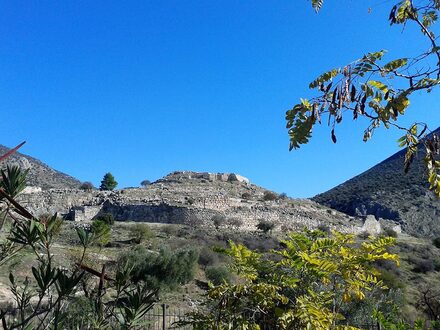
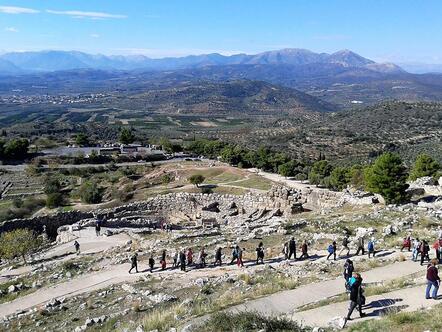
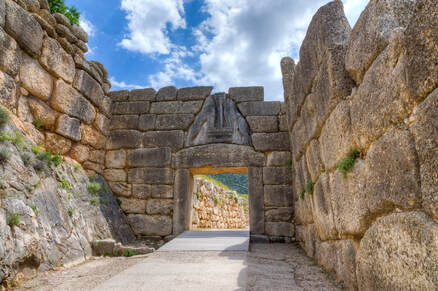
The pre-historic Mycenaean citadel, fortified with Cyclopean walls with two gates (the Lion Gate and the North Gate) is a fascinating place. The first walls were erected around 1350 BC but the citadel assumed its final form at around 1200 BC. Inside the enclosure, the more important buildings are the Granary, the garrison's quarters, the two sanctuaries (Grave Circle "a" which contains six royal tombs of the 16th c. BC, and the living quarters of the dignitaries and the priests in the lower citadel), House of the Warrior Vase, the Ramp House, the South House and the Tsounta House).
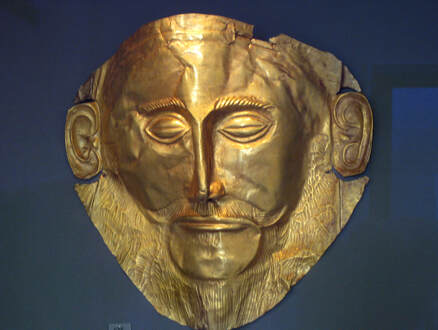
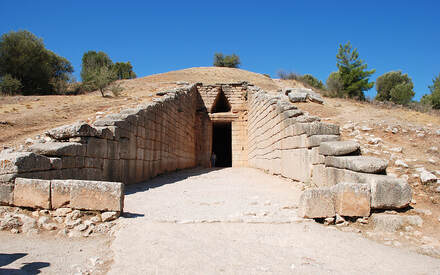
There is also the Mycenaean palace on the crest of the hill, a smaller palace further east, known as the House of the Columns, the House of the Artists, and finally, at the N.E. side, the Secret Cistern. Groups of Mycenaean dwellings have been excavated outside the walls, along with Grave Circle "B", nine "tholos" tombs of the Atridae among which, the treasure of Atreus, aka "The Tomb of Agamemnon", the tomb of Clytemnystra, the tomb of Aegisthos, and others.
The decline of Mycenae occurred around 1100 BC, possibly due to repeated damage from earthquakes and fires. The Dorian migration was the outset of the decay of Mycenae, which was destroyed by the people of Argos in the 5th c. B.C. and was abandoned in the 10th c. Mycenae had managed, however, to have once been a truly great empire, which has indelibly stamped its reputation on the history not only of Greece, but the entire world. The modern village of Mycenae is located 2 km away from the archaeological site and 24 km North from the city of Nafplion.
There is also the Mycenaean palace on the crest of the hill, a smaller palace further east, known as the House of the Columns, the House of the Artists, and finally, at the N.E. side, the Secret Cistern. Groups of Mycenaean dwellings have been excavated outside the walls, along with Grave Circle "B", nine "tholos" tombs of the Atridae among which, the treasure of Atreus, aka "The Tomb of Agamemnon", the tomb of Clytemnystra, the tomb of Aegisthos, and others.
The decline of Mycenae occurred around 1100 BC, possibly due to repeated damage from earthquakes and fires. The Dorian migration was the outset of the decay of Mycenae, which was destroyed by the people of Argos in the 5th c. B.C. and was abandoned in the 10th c. Mycenae had managed, however, to have once been a truly great empire, which has indelibly stamped its reputation on the history not only of Greece, but the entire world. The modern village of Mycenae is located 2 km away from the archaeological site and 24 km North from the city of Nafplion.
- To search for and book a car rental so that you may visit Mycenae and explore the Peloponnese, visit AutoEurope.
- Viator delivers online and mobile access to thousands of trip activities including tours, attractions, shore excursions and private guides throughout Greece.
- Tiqets works with thousands of renowned museums, thrilling attractions, and hidden gems to offer unforgettable travel experiences.
Sightseeing
- The impressive, majestic, Lions Gate, at the entrance of the Mycenaean citadel.
- The royal complex.
- The six royal tombs, in the 1st tomb ring (16th c. BC), the grenary, temples and houses, in the citadel.
- The 2nd tomb ring, with the vaulted tombs (14 royal and 12 private), outside the citadel.
- The treasure of Atreus or the tomb of Agamemnon (13th c. BC), a grandiose tomb, near the citadel.
- The Heraion of Argos, a pan-Hellenic worship center of the goddess Hera.
- The church of the Assumption of Virgin Mary, in the village Chonikas (8 km to the south).